Melissa Lara, Brian Thoms, Comp 447, 10/1/2025
As technology expands, chatbots are becoming more integrated into our daily lives. Most of the time users don’t realize that they are using chatbots since we are constantly using them to do tasks such as making phone calls or using our mobile devices. Chatbots don’t only refer to chat-based bots. They also refer to other types of bots such as voice chatbots, rule-based chatbots, and Ai-powered chatbots. Rule-based chatbots only use pre-determined answers to respond to questions while Ai-powered chatbots learn from conversations they have with the user. Chatbots improve customer service while reducing costs. There are concerns over data privacy and security.
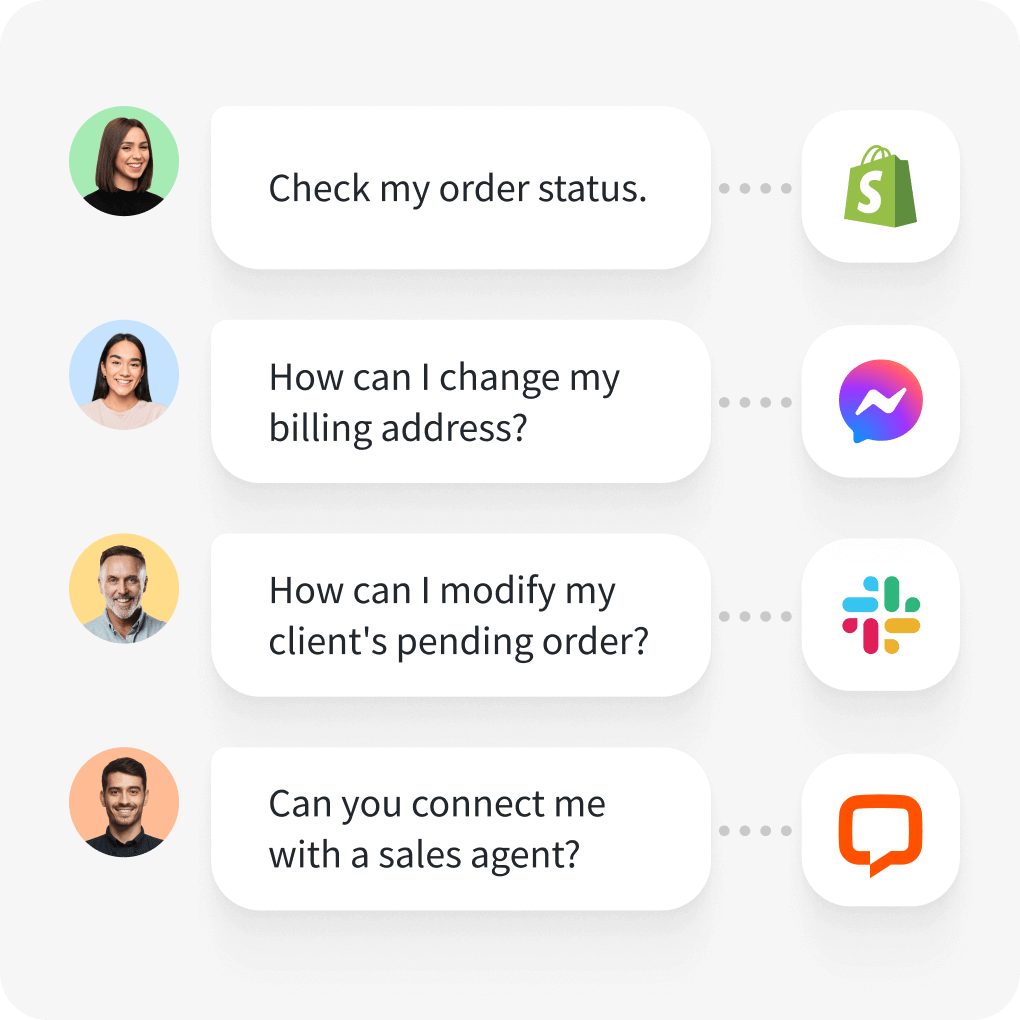
Description: This picture shows some of the functions you can use a chatbot for.
The Picture below displays how a chatbot functions and how it uses user input to process user requests.
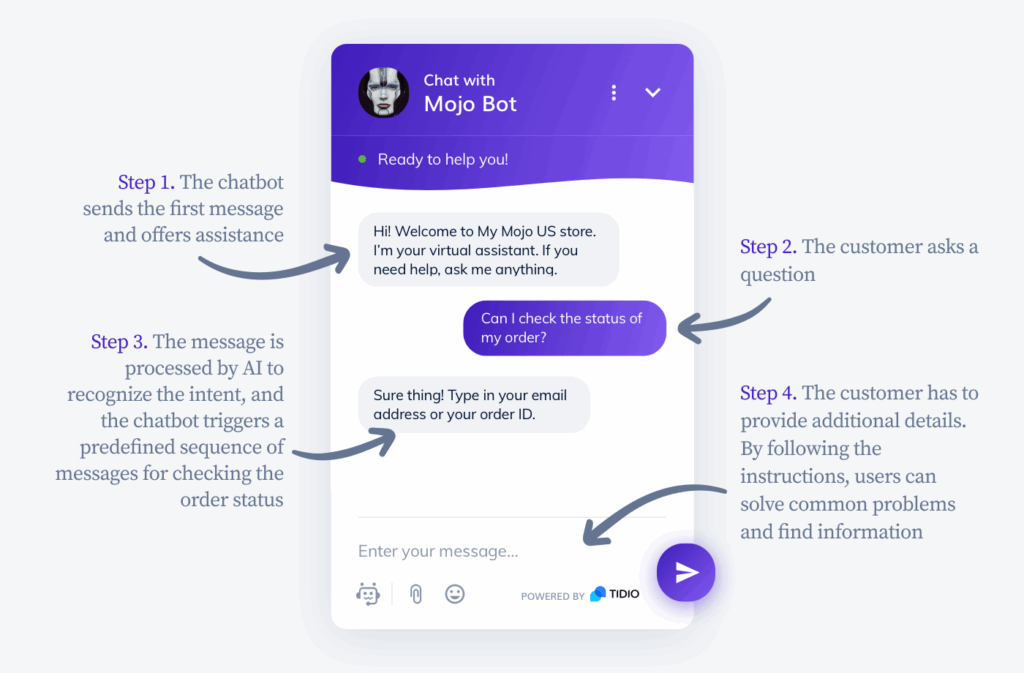
Chatbots are virtual assistants that help the user with automated tasks. “It identifies user intent and extracts domain-specific entities” (Adamopoulou 2020). It takes user input and processes requests in a quick timeframe. Chatbots are available on most mobile devices. Since most people in today’s society have access to a phone, chatbots are used frequently. Chatbots have been adopted into different fields in the workforce such as customer service and sales. Chatbots have lots of helpful features such as answering questions, making appointments, providing recommendations for products, and assisting customers with their purchases. They can also help you check the weather, manage your subscriptions, set alarms, and send reminders to your phone. However, there can also be both good and bad ways of using chatbots.
A positive effect of chatbots is improving customer service and reducing costs. Many fields such as health and retail are using chatbots to improve customer service. A reason for this is that “the chatbot’s support is available around the clock allowing consumers to post concerns and receive a tailored response within seconds” (Misischia 2022). This allows businesses to automate certain tasks such as answering common questions and reducing wait times for customers. This method provides a faster, more efficient experience for all customers. “Chatbots are able to identify key words in a customer’s request and ultimately deliver the best possible solutions to customer problems through coherent answers” (Misischia 2022). This means they are able to provide more detailed answers to questions and requests. Chatbots are also good for collecting feedback from customers by conducting surveys. Users may use chatbots in a good way such as using chatbots to understand difficult topics and to brainstorm ideas for creative projects. Businesses also save money by using chatbots. “The reduction in customer service costs and the ability to handle many users at a time are some of the reasons why chatbots have become so popular in business groups” (Adamopoulou 2020). It decreases the amount of people businesses need and improves efficiency. However this may also lead to other issues such as job displacement.
Some negative effects of using chatbots are the concerns about privacy and how user’s data is being used. Chatbots utilize user data to provide detailed responses to users. This data is collected to make the chatbots more personalized. “This function raises significant privacy concerns due to the potential for data misuse or releases to third parties without users’ knowledge or consent” (Tawfeeq 2023). Users are unaware of what their information is being used for and that raises concerns on how secure chatbots are when it comes to storing and using data. The collected data has the risk of being stolen in cyberattacks. There is “potential for these systems to spread misleading information or impact public opinion, particularly in light of their ability to imitate human behavior and produce more persuasive language” (Tawfeeq 2023). Users may use this information to impersonate and manipulate other people into giving out personal information. They may send out emails pretending to need information from the user or use voice technology to make calls to steal bank information.
In conclusion, while there are many good ways to use chatbots there are also bad ways chatbots can be used. While chatbots may improve on customer service and costs they may also have issues when it comes to user’s privacy. Efficiency and productivity when it comes to customer service and customer satisfaction have also helped reduce costs for businesses. Data is collected and used for malicious purposes. With this information we should improve chatbots to more helpful and safe for users to use.
References:
Adamopoulou, E., & Moussiades, L. (2020, May 29). An overview of chatbot technology. SpringerLink. https://link.springer.com/chapter/10.1007/978-3-030-49186-4_31#Sec5
Misischia, C. V., Poecze, F., & Strauss, C. (2022, March 22). Chatbots in customer service: Their relevance and impact on service quality – sciencedirect. https://www.sciencedirect .com /science/article/pii/S1877050922004689
Tawfeeq, T. M., Awqati, A. J., & Jasim, Y. A. (2023, July 26). The ethical implications of Chatgpt Ai Chatbot: A Review. JMCER. https://jmcer.org/research/the-ethical-implications-of- chatgpt -ai-chatbot-a-review/